Why Google Ads keeps giving the same result and how to change it
The world of contextual advertising no longer works according to outdated templates. If you are looking for a solution to improve Google Ads results, the first thing you should pay attention to is the fundamental update of search engine algorithms. Google has completely rethought the mechanics of displaying ads, giving businesses new opportunities to attract traffic.
Previously, the strict principle of “one brand, one position” applied in the search results: a company’s ad could appear either in the top block (Top Ads) or at the bottom of the page (Bottom Ads). The new approach completely eliminates this restriction. Now, Google Ads allows text ads from one advertiser to appear simultaneously at the top and bottom of the page within a single search session. Thanks to this, the updated advertising on Google creates a double point of contact with the user during one session, which significantly increases the likelihood of a final conversion.
User psychology and individual auctions: key reasons for Google updates and how Google Ads advertising responds to them
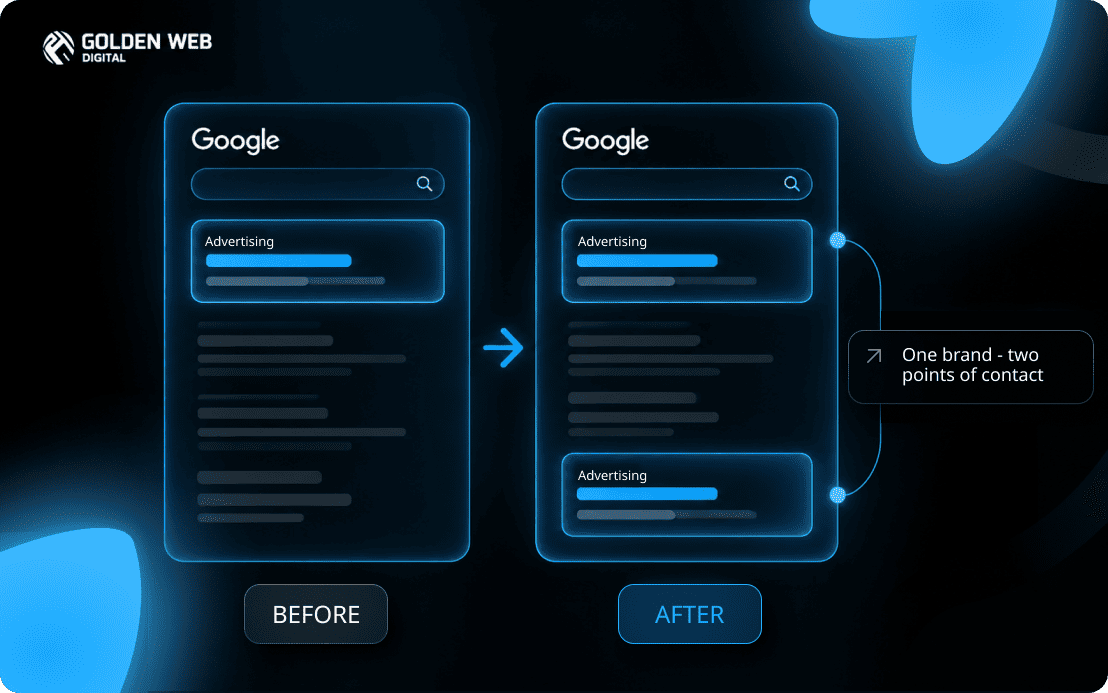
The main reason for the update is the system's desire to optimize the user experience and turn the footer ad unit into a full-fledged engagement tool, rather than a purely technical addition to the output. Modern advertising in Google Ads must take into account a more complex customer journey: a potential buyer rarely makes an order from the first second click. Usually, he quickly looks at the first positions, scrolls to the end of the page, compares the organic output, and only then makes a decision - return to the top or choose the offer at the very bottom.
To ensure that the offer remains compelling at every stage of scrolling, Google has implemented an independent selection mechanism for different ad areas. The algorithm conducts a separate auction for the top and bottom blocks according to the context of the query.
That is why professional setup of advertising campaigns requires detailed study of the structure, relevance of ads and landing pages. With this approach, updated advertising in Google keeps the attention of a potential client on both sides of the page, ensuring maximum brand visibility and continuous contact with a hot audience.
Google test results: why Google's updated contextual advertising gives more impressions and sales
The introduction of the new mechanics was preceded by a series of large-scale internal experiments by Google. The results were convincing for the market: the updated Google contextual advertising recorded a significant increase in highly relevant impressions and a noticeable increase in response specifically from ads placed in the footer of the page.
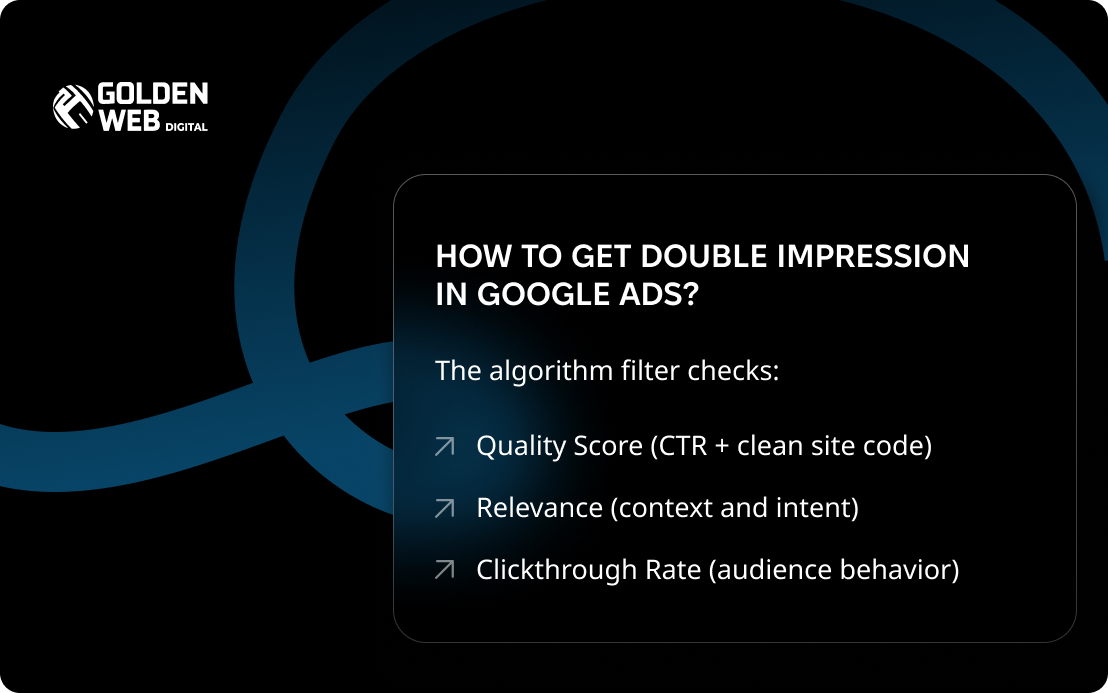
At the same time, the system acts selectively - the new approach does not mean automatically repeating absolutely every text twice. To receive double placement, the ad must pass the algorithm's intelligent filter:
- High Quality Score: Evaluates expected ad detail, predicted CTR, and clean landing page code.
- Query relevance: the exact context of the search and the correspondence to the user's intent are analyzed.
- Probability of interaction: the system calculates the appropriateness of re-showing based on audience behavioral factors.
That’s why professional contextual advertising setup plays a crucial role in modern campaigns. When ads are crafted flawlessly, the algorithm is more likely to double-show, driving consistent sales growth through Google Ads.
New rules of the game for business: the practical impact of the update on advertisers and how competent Google Ads setup scales profits
The new algorithmic logic opens up additional opportunities for businesses to attract hot traffic and re-engage buyers. However, to turn these updates into measurable profit growth, impeccable relevance of all links becomes crucial. Keywords, ads, extensions and landing pages should form a single, clearly connected ecosystem. At the same time, it is worth evaluating effectiveness solely on the basis of your own statistics, closely tracking impression positions, average cost per click (CPC) and the number of final conversions.
It is the competent setting of Google advertising that allows you to flexibly adapt your strategy to the new rules of the game and make each advertising budget work to the maximum. If you want to go beyond standard campaigns and turn search traffic into a predictable source of income, it's time to order contextual advertising from the Golden-Web Digital team.
We build promotion as a fundamental part of your overall Digital strategy, where every hyphen in the code and every word in the offer work towards the final result. Golden Web Digital's comprehensive Google Ads setup turns complex algorithm updates into your transparent competitive advantage and a stable flow of new orders.