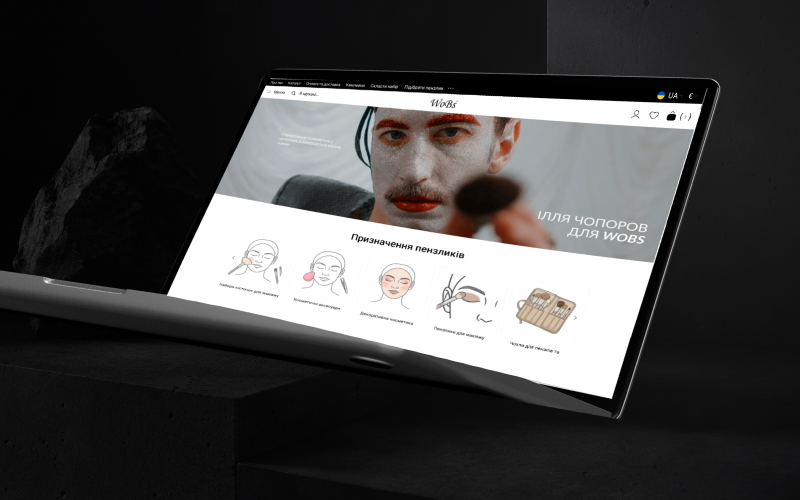
WOBS Case Study: SEO Promotion and Migration from Horoshop to Python/Django
View Project

Our team has received your message and will get in touch shortly.
We're here to help and answer any questions you may have.
Technologies that drive your business
We create digital products for real business processes and tasks: websites, CRM, ERP, internal systems, SaaS solutions, web and mobile applications, integrations and automations.
The basis of our development is Python and Django. This allows us not to limit the future product to the capabilities of a ready-made CMS or boxed system, but to design it around the logic of a specific business.
You need to implement a non-standard process, combine several systems, create your own account or a unique loyalty system, automate the team's work, integrate third-party services, or implement a new business idea - the architecture and functionality can be built for a specific task and further developed together with the business.
Golden Web Digital's DEV division covers both products through which businesses interact with their customers and internal systems that help manage processes, data, and teams.
We can build either a standalone digital product or a complete IT ecosystem in which a website, CRM, ERP, applications, internal services, and external platforms exchange data and operate according to a unified logic.
We create online stores, marketplaces, corporate websites, service websites, business card websites, and landing pages with custom architecture and an administration system.
To us, a website is more than a collection of pages. It is a digital product that should support marketing, sales, and further business growth.
We build in the structure needed for SEO, analytics, advertising scenarios, content, integrations, and future scalability at the design stage.

We create custom software for internal and external business processes.
Not every system needs to be built from scratch. Over the years, we have developed our own architectures and foundational solutions that provide a starting point for new products.
This lets us use a proven technological foundation rather than spend resources recreating standard logic. At the same time, this foundation does not limit future development: it can be modified at code level and extended with new modules, integrations, automations, and custom business logic to meet the requirements of each project.
CRM and ERP Systems
We design systems around the way a company actually operates. These may cover manufacturing, order processing, detailed analytics, systems for offline retail networks with cash registers and shifts, project and employee task management, and other business-specific processes.
We identify which processes need to be connected, which data—including customer information—must be stored and transferred, what permissions users require, where automation is needed, and which external services the system should interact with.
Automation Systems
We develop software solutions for processes that are currently performed manually, take too much time, or create risks of errors and information loss.
LMS, WMS and TMS
We can develop specialized systems for learning, warehouse management, logistics, and other operational processes tailored to a specific company's workflows.
SaaS Solutions
We create online services and software products for customers, partners, and other companies to use.
Analytics Systems
We combine data from multiple sources and automate its collection, processing, and presentation for analysis and management decisions.
Appointment and Booking Services
We develop custom logic for appointments, bookings, calendars, specialist schedules, availability, statuses, and other scenarios.
An off-the-shelf CRM or ERP can handle typical tasks. But as a business grows more complex, the opposite situation increasingly arises: the company starts reshaping its processes around the software's capabilities instead of the software supporting its processes.
With custom development, we take the opposite approach.
We do not build every CRM or ERP from a blank slate. GWD has its own proven architecture and core logic for such systems, developed through experience with different business processes. It serves as a reliable technological foundation that we adapt and develop for each company.
We first analyze how the business operates, which processes are connected, where manual work occurs, how data moves, and which operations need automation.
The goal is not always simply to transfer a company's current processes into a new system. During analysis, we may suggest a different workflow, simplify individual stages, eliminate unnecessary operations, or design processes better suited to that business sector.
We then design the architecture of the CRM, ERP, or another internal system.
Functionality is not limited to a standard set of modules. The system can grow with the company, gaining new permissions, processes, integrations, automations, reporting, and custom business logic.
To implement complex CRM or ERP systems in a controlled manner without unnecessary operational risks, we can launch large systems in stages.
We first identify the highest-priority process or area, automate it, test the system under real operating conditions, and only then move on to the next component.
This approach allows us to:
When designing, we consider both internal connections—interaction and process automation within individual departments—and external connections—data exchange between different divisions and company systems.
Our underlying architecture is not a fixed, off-the-shelf system: every project develops independently and can be customized to the processes, requirements, and future needs of a specific business.
If part of a company's operations relies on 1C or another legacy solution, we can design a modern CRM, ERP, or specialized Python system and migrate the necessary data and business processes to it.
Migration thus becomes more than replacing old software with new software: it offers an opportunity to rethink the company's technology infrastructure, eliminate unnecessary manual tasks, and prepare it for future development.
We create digital products for customers, employees, partners, and internal teams.
These may include customer portals, internal work systems, loyalty programs, self-service platforms, B2B platforms, specialized web applications, or cross-platform products.
What matters most to us is not the application's format but the business logic it needs to deliver.
If the product needs to exchange data with a website, CRM, ERP, or other systems, we account for this during architecture design.
Modern businesses rarely use just one system.
A website may receive data from a CRM or ERP, send orders to an accounting system, and synchronize with marketplaces, payment providers, delivery services, and other platforms.
That is why API integrations and automated data exchange between systems are a separate area of our work.
We can implement:
The purpose of such automation is simple: information should flow between systems without constant manual copying, allowing the team to focus on work rather than moving data from one dashboard to another.
Integrations and AutomationWe create chatbots to automate specific customer interaction scenarios and internal processes.
A bot can be more than a separate communication channel. It can be part of a digital ecosystem: retrieve information from a system, pass data to a CRM, register inquiries, trigger automated workflows, or route users to the appropriate specialist.
The specific functionality depends on the business objective and the platform on which the solution will operate.
Python enables us to create far more than standard websites.

It can power web platforms, CRM and ERP systems, automation systems, SaaS products, analytics solutions, APIs, data services, and AI.
In our projects, Python works alongside Django, JavaScript, Tailwind CSS, and SQL, providing the technological foundation for backend and frontend logic, interfaces, and data processing.
But the main benefit for businesses is not the programming language's name itself.
We are not limited to the modules available in a ready-made CMS.
If a business needs a specific scenario, an unconventional structure, a custom calculation model, user accounts, different user permissions, automation, or complex system interactions, we can design that logic directly for the product.
This means virtually any technically feasible business idea can become a digital product rather than being abandoned because of platform limitations.
A business at launch and the same business three years later often have very different systems.
New business areas, markets, features, integrations, sales channels, and automations emerge.
Well-designed architecture lets you extend the product gradually instead of starting over with a new solution every time.
For web products, custom development gives us much more control over the technical foundation that affects future SEO performance.
At the architecture stage, we lay the technical groundwork for future SEO promotion: URL structure, indexing rules, metadata, sitemap.xml, robots.txt, canonical tags, JSON-LD structured data, SEO filters, and the ability to expand the website structure to meet new search demand.
Python has a mature ecosystem for APIs, data processing, and automation, making it well suited to systems that need to interact with other digital products.
Python is widely used in data engineering, analytics, machine learning, AI, and automation. This broad range of applications fuels a constantly evolving technology ecosystem with new libraries, APIs, AI tools, and data solutions.
For customers, this means the product's technological foundation has strong potential for further development. As new technologies emerge, they can be integrated into the existing system, expanding its capabilities without replacing the entire technology stack simply because the product becomes more complex.
A large selection of libraries and ready-made technology components means less time spent recreating standard mechanisms and more resources devoted to the specific product's functionality.
Python gives us what matters most: the freedom to grow a business without being constrained by a platform's capabilities.
Ready-made CMS platforms, SaaS services, and off-the-shelf systems—WordPress, OpenCart, Shopify, Horoshop, Magento, and others—may seem like good solutions at first, mainly because of lower initial costs and the ability to launch a typical website quickly.
However, the true cost of such a solution often becomes apparent as the project develops.
Instead of investing in new features, marketing, and scaling, businesses begin spending on plugins and modules, fixing technical issues, update compatibility, workarounds for platform limitations, and repeated modifications.
What initially appeared to be a budget-friendly alternative can gradually turn into an ongoing technical expense, with much of the budget going toward keeping the product operational and overcoming the underlying system's limitations rather than developing it.
This becomes particularly evident when a business moves beyond simply having a website and starts actively growing through SEO, Google Ads, and other marketing channels.
Some ready-made platforms lack the flexibility needed to build the right SEO architecture, manage URLs and indexing, handle filters and duplicate pages, scale site structure, create necessary landing pages and feeds, set up analytics, and implement unconventional scenarios.
Marketing then becomes dependent on what the platform permits rather than what the business needs to grow.
We encountered these situations for years while working on SEO and Google Ads campaigns. This was one of the reasons we developed our own DEV division and moved toward Python/Django development.
Over years of development, we have accumulated enough in-house solutions to avoid recreating basic mechanisms for every new project.

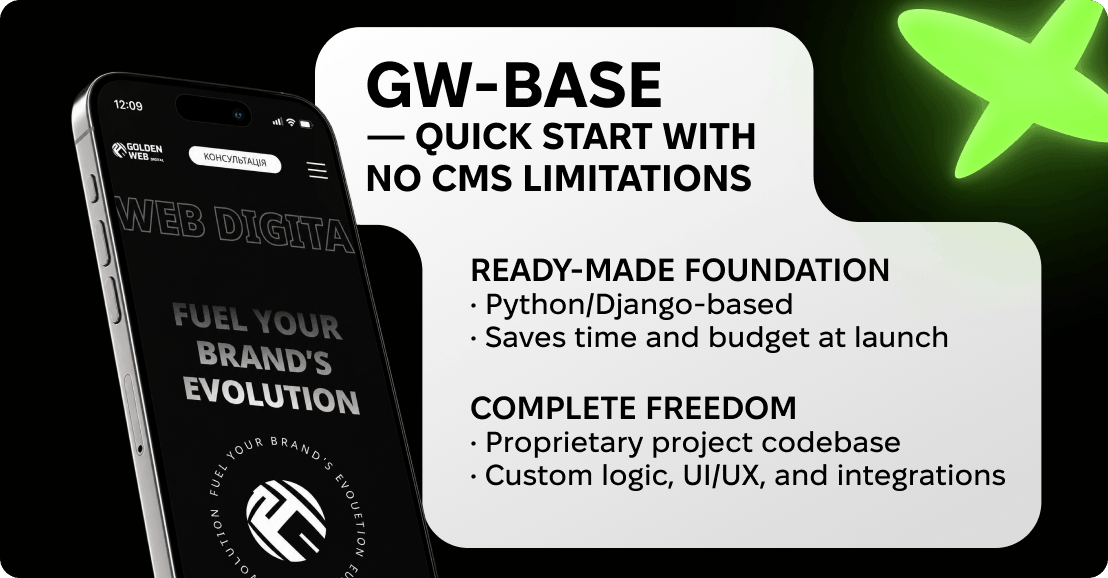
That is why GWD created GW-base, our own Python/Django foundation with a proven architecture and standard mechanisms needed to launch various types of websites.
For clients, this means part of the technological foundation has already been built and tested. The team can devote resources to project-specific architecture, UX/UI, business logic, integrations, and differentiating functionality rather than programming the basics again.
But the fundamental difference between GW-base and traditional CMS or SaaS platforms is not simply that it is our own technology.
The main difference is how each project operates after development begins.
With a typical platform-based solution, the website remains tied to the platform's architecture, core, available extensions, and compatibility rules. As the business grows, these determine what can be achieved without compromise.
In GW-base, the underlying solution is only a starting point. Once work begins, each client project exists independently, with its own codebase, architecture, and business logic.
Changes needed by one business therefore affect only its own product. We do not have to keep a project within a universal pattern just because the underlying platform was built that way.
We can:
This is where the key business value emerges.
The client receives a ready-made technological foundation for launch without limiting the product's future development.
We therefore do not force a choice between completely bespoke development from scratch and a standard platform. GW-base combines both approaches: standard mechanisms are already available, while everything that makes the product unique can be designed and developed individually.
GW-base provides a proven technological foundation for launch while retaining the freedom of custom code-level development.
This flexibility remains after launch. If the business changes its sales model, launches a new direction, enters another market, or needs new integrations or automations, the product can evolve on its existing foundation instead of being replaced because of the original architecture's limitations.
We start with an established foundation without predetermining what the project can ultimately become.
We do not adapt a business to a system—we develop the system around the business.
Once the technology foundation is established, we select the specific GW-base configuration based on the website type and business model.
Our task is no longer to recreate typical mechanisms, but to assemble the foundation the project needs and extend it with custom logic.
For online store development, we can use the GW-base e-commerce configuration, which already includes the essential mechanisms for online sales:
We then adapt this foundation to the specific store's business model, implementing custom pricing and order logic, loyalty programs, integrations with accounting systems and marketplaces, and other required scenarios.
For service websites, we use a configuration that can include service categories and pages, user accounts, reviews, interaction forms, and the necessary content sections.
Further functionality is determined by the business model itself.
For example, for a clinic, salon, service center, or another appointment-based business, we can implement service and specialist selection, date and time booking, availability and status management, and subsequent data transfer to an internal system.
For smaller projects, we use a configuration without unnecessary e-commerce logic.
It can include informational pages, services, contacts, a blog, contact forms, content management, SEO settings, analytics, and other functionality needed by the specific company.
Along with the website, businesses receive tools to manage content and core product data independently.
Depending on the project, the admin panel can be used to manage pages, texts, products or services, categories, media, orders, users, SEO parameters, and other data without involving a developer for every routine change.
GW-base was developed with GWD's practical experience in SEO and Google Ads in mind. Marketing requirements are therefore considered at the technological foundation level, not added as an afterthought after the website launches.
Depending on the project, we define and implement the necessary SEO parameters, technical structure, analytics, events, advertising integrations, product feeds, and other mechanisms required for future promotion.
In other words, the team does not launch the site and then ask how to adapt it for marketing. Marketing requirements are part of product design itself.
As a result, the team does not begin by asking how to adapt a website for marketing after launch. Instead, it builds the product with a clear understanding of how it will attract traffic, scale its structure, and grow.

We use technologies that allow us to build functional, flexible, and scalable digital products.
Python
Our primary language for backend development and business logic in digital products.
Django
The Python framework we use to build web system backends, administration logic, user management, data processing, and other product components.
JavaScript
Used for interactive interface logic and user interactions with the product.
Tailwind CSS
Helps us build consistent interfaces and responsive frontends.
PostgreSQL
Used to work with structured data and system databases.
The technology stack is not an end in itself: the architecture should solve business problems, not force the business to work around a selected technology.
Communication and Analysis
We do not start with programming.
We explore the business challenge, the company's operating model, future users, processes, existing systems, and expectations for the product.
Requirements Definition
We define key functionality, user scenarios, permissions, required integrations, data processing logic, and other essential requirements for the future product.
Product Architecture
We establish the foundation on which the future product will be built.
Technical architecture determines the system's components, how they interact, how data is transferred and stored, which integrations are needed, and how to allow for future product growth.
For complex internal systems, we also consider:
Internal connections
processes and data exchange within individual departments;
External connections
interaction and information exchange between departments, systems, and external services.
When we develop a website, its SEO architecture is designed in parallel. This is a mandatory part of website planning at GWD: SEO requirements are considered before UX prototyping, design, and programming, not imposed on an already defined product. The SEO team analyzes search demand and defines requirements for the future site's structure: categories and pages, their hierarchy, URLs, internal linking, expansion into new areas, and other elements that affect search visibility and future scaling.
Thus, even before design and development, we understand not only how the product will work technically, but also what its structure should look like from the perspectives of users, the business, and search promotion.
UX Prototyping
Based on the defined requirements and architecture, the Design team plans how users will interact with the product.
We develop the structure of screens or pages, user journeys, the placement of functional blocks, transitions between them, and paths to key conversion actions.
At this stage, we focus primarily on usability, logic, and functionality rather than the final visual appearance.
Technical Specification Development
Once the architecture and UX prototype have been reviewed, we turn the approved product logic into a structured technical specification for development.
The specification documents functionality, system workflows, individual element behavior, integrations, data requirements, and other conditions needed by the DEV team to implement the product.
Requirements can generally be divided into three groups:
Core Processes
standard functionality necessary for the product to operate.
Essential Requirements
unique or business-critical processes that must follow specific logic.
Expert Recommendations
tasks for which the client does not yet have a clearly defined vision. Here, our team brings its expertise and recommends the best implementation approach.
As a result, both the client and the team share one documented vision of how the future product should work before programming begins.
UI Styling
Once the UX logic has been approved, we move on to the product's visual design.
The Design team creates the UI style: colors, typography, graphics, interface components, visual accents, and the overall character of the product.
At this stage, the functional structure receives its final visual appearance, aligned with the brand and designed to make product interactions clear and consistent.
Development
The DEV team implements the backend, frontend, business logic, integrations, and other system components according to the approved architecture, prototype, design, and technical specification.
Testing
We test functionality, user journeys, integrations, data transfer, and critical product components.
Launch
We prepare the product for the production environment and release it for real-world use.
When developing a website, the SEO team simultaneously works on its launch strategy: checking technical SEO settings, readiness for indexing, structure, and other critical parameters before opening the site to search engines.
Support and Growth
After launch, the product enters its next stage: support and ongoing development.
As new needs arise, we can add functionality, automations, and integrations, adapt the system to changes within the business, and develop the product based on real usage experience.
Our move into custom development grew directly out of our experience with SEO and Google Ads advertising.
You can set up effective SEO. You can attract relevant traffic to a website through Google Ads. But what happens if the product itself is not ready to handle and convert that traffic?
Poor architecture, technical limitations, analytics issues, UX problems, or the inability to implement necessary scenarios gradually become limitations not just of development, but of marketing itself.
That is why DEV at GWD does not operate separately from SEO, PPC, and Design. Their collaboration is embedded in the product development process.
SEO specialists are involved in website creation before development begins, establishing requirements for structure, SEO architecture, technical foundations, and content based on search demand, expertise, and Google's requirements.
This allows us to plan the necessary URLs, page structure, internal linking, technical SEO mechanisms, and future site scalability at the design stage.
Our core architecture already supports management of Title and Description, alt attributes, headings, sitemap.xml, robots.txt, canonical URLs, JSON-LD structured data, SEO filters, and other SEO parameters.
Before launch, the PPC team determines which landing pages, conversion journeys, events, and data will be needed for advertising campaigns.
Depending on the project, we integrate mechanisms to analyze and track user interactions, including GA4, Meta Pixel, TikTok Events, and other systems.
For e-commerce, we also build in the logic needed to generate and manage product feeds.
UX/UI designers work on user journeys, interface logic, and the product's visual system.
Design makes interaction with the product clear and consistent: users should navigate the interface easily, understand the next steps, and move toward their goals without unnecessary barriers.
As a result, marketing does not receive a finished website it has to adapt to. DEV, Design, and Marketing shape the product together before launch—one of the fundamental principles of development at GWD.
Not every business needs a complex system from day one.
Initially, it may be a website with basic functionality already built into the relevant configuration of our technological foundation.
As the business grows, it can connect CRM or ERP, accounting system integrations, web or mobile applications, automations, loyalty programs, marketplaces, new external services, and additional data processing logic.
That is why we believe today's solution should not become tomorrow's limitation.
Well-designed architecture allows a standalone product to gradually grow into a system in which the website, CRM, ERP, applications, analytics, and third-party services work together.
Technology then moves from being a development expense to becoming infrastructure that supports business growth.
Every DEV project begins with a specific business challenge.
Sometimes the goal is to create a new online sales channel. Sometimes it is to automate internal processes. In other projects, we connect multiple systems, implement unconventional business logic, or prepare the technological foundation for scaling.
Our case studies show the original challenge, the logic behind the technical solution, and the finished product, so you can evaluate our approach to custom development through real projects.
WOBS Case Study: SEO Promotion and Migration from Horoshop to Python/Django
View Project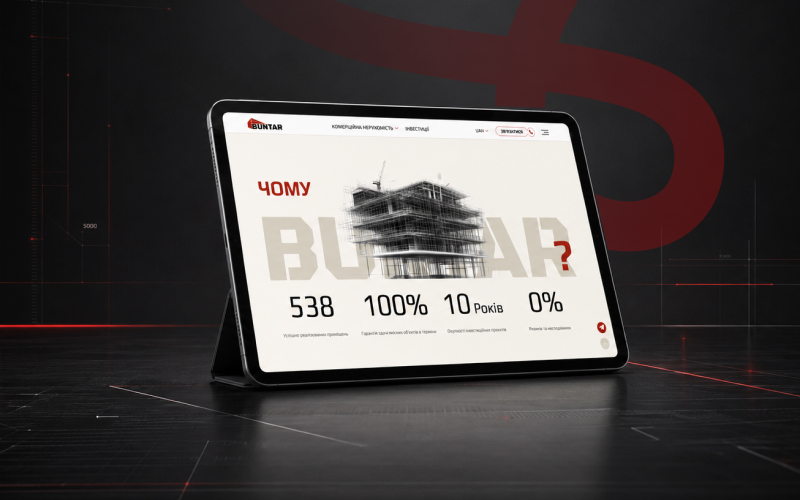
Buntar Case Study: SEO Launch and Promotion of a Property Developer's Website
View Project
PPC Case Study: How Website Quality Affects Google Ads Performance
View ProjectYou don't need to come to us with a ready-made technical specification.
You can start with a problem, a process that needs automation, or even an idea without a defined technical implementation.
A client manager will gather the necessary information and involve DEV, Design, and marketing specialists as needed.
Together, we will determine what to build, which architecture best fits the challenge, and how to prepare the product for future development.
Python lets us build custom business logic, integrations, automation systems, web platforms, CRM/ERP, and solutions for data and AI. Its main benefit for us is the ability to develop a product around business needs rather than platform limitations.
No. You can contact us with a business challenge or an idea. We help define requirements, develop the architecture and UX prototype, and then document the product logic in a technical specification.
A ready-made CMS operates within the architecture, modules, and rules of its platform. This may reduce the amount of development needed at first, but as the product grows, the business becomes increasingly dependent on what that system allows it to change, integrate, or expand.
In a custom product, architecture and business logic can be modified directly to meet the specific project's needs.
At GWD, we also have GW-base, our own Python/Django foundation: standard functionality does not need to be built from scratch each time, while every project remains independent and can be deeply customized at code level.
Not necessarily. For typical tasks, we use GW-base, our own Python/Django foundation with core functionality. This avoids rebuilding standard mechanisms while retaining the flexibility to customize and continue developing the product.
Yes. We can design a new system around the company's processes and migrate the necessary data and workflows from its legacy solution.
Yes, provided the external service offers the technical capabilities required for integration. We assess this during analysis and architecture design.
Yes. After launch, we can continue providing technical support and developing the product by adding functionality, integrations, automations, and adapting the system to new needs.
GWD's DEV team specializes in custom Python/Django development and does not perform technical modifications to third-party CMS platforms.
If a CMS-based website is used in a GWD marketing project, we can analyze it and provide recommendations. If the platform's technical limitations begin to hinder SEO, advertising, or business scalability, we can consider migration to a custom solution.

