
Case study: merging two websites into one custom Python platform while preserving results
View caseSEO + Google Ads + Brand Management & SMM = a system for attracting customers and growing your business
We help businesses attract customers, increase online sales, build brand awareness, and scale their online presence through systematic digital marketing.
At Golden Web Digital, promotion channels do not operate in isolation. SEO, Google Ads, targeted advertising, Brand Management, SMM, and design are aligned around shared business goals, while analytics is an integral part of every department's work.

Not every project needs to launch all traffic channels at once. We first analyze the business, product, current situation, and each channel's potential. We then decide where to start, which marketing tools to introduce next, and how to build a promotion strategy for future growth.
Potential customers are already searching Google for your product, service, or information. The question is whether they will find your website.
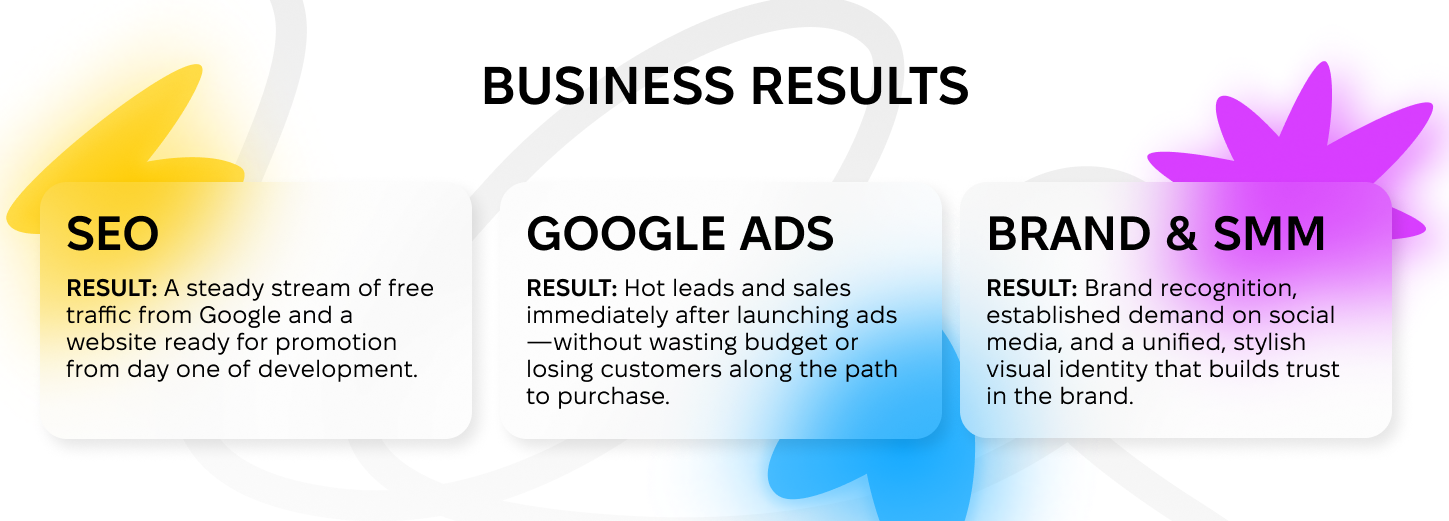
SEO helps businesses attract organic traffic from Google and other search engines when users already have an interest in the product.
We do not limit organic promotion to rankings for individual keywords. We analyze search demand, website structure, technical performance, content, competitors, and off-site factors affecting search visibility.
Our SEO services include:
For us, SEO does not begin after a website goes live. SEO specialists are involved during website creation as a mandatory part of GWD projects.
Before development starts, our SEO team analyzes search demand and defines requirements for the website structure, URLs, SEO architecture, technical foundations, content, and scalability.
This means SEO is not simply “added” to a finished website: the requirements for future organic growth are built into the product before launch.
But what if potential customers are looking for your product right now?
Google advertising makes it possible to reach audiences when they show an interest in a product, search for a specific service, or match the characteristics of potential customers.
We select campaign types and formats to match the business model, objectives, and stage of the project.
We work with:
Paid promotion, however, goes beyond configuring an advertising account.
We analyze where users land after a click, how well the landing page meets their expectations, whether data is being collected correctly, and where potential customers may drop out before submitting an inquiry or making a purchase.
When needed, PPC specialists work with development and design teams to define requirements for landing pages, functionality, and user journeys.

Not all demand has already formed on Google.
Some potential customers do not yet know the brand, understand the differences between products, or even recognize the need a business can address.
Brand Management, SMM, and social media marketing work with this part of the customer journey.
We help shape brand positioning, establish consistent communication, and create content that introduces products, sustains interest, and grows awareness.
Our services include:
Brand Management, SMM promotion, targeted advertising, content, and design work together to ensure consistent brand communication across audience touchpoints.
Which is better: SEO or Google Ads?
This is one of the most common questions in digital marketing. But these tools do not always need to be an either-or choice.
Organic promotion and paid search solve different challenges, but both reach one of the most valuable audiences: users already expressing search interest in a product.
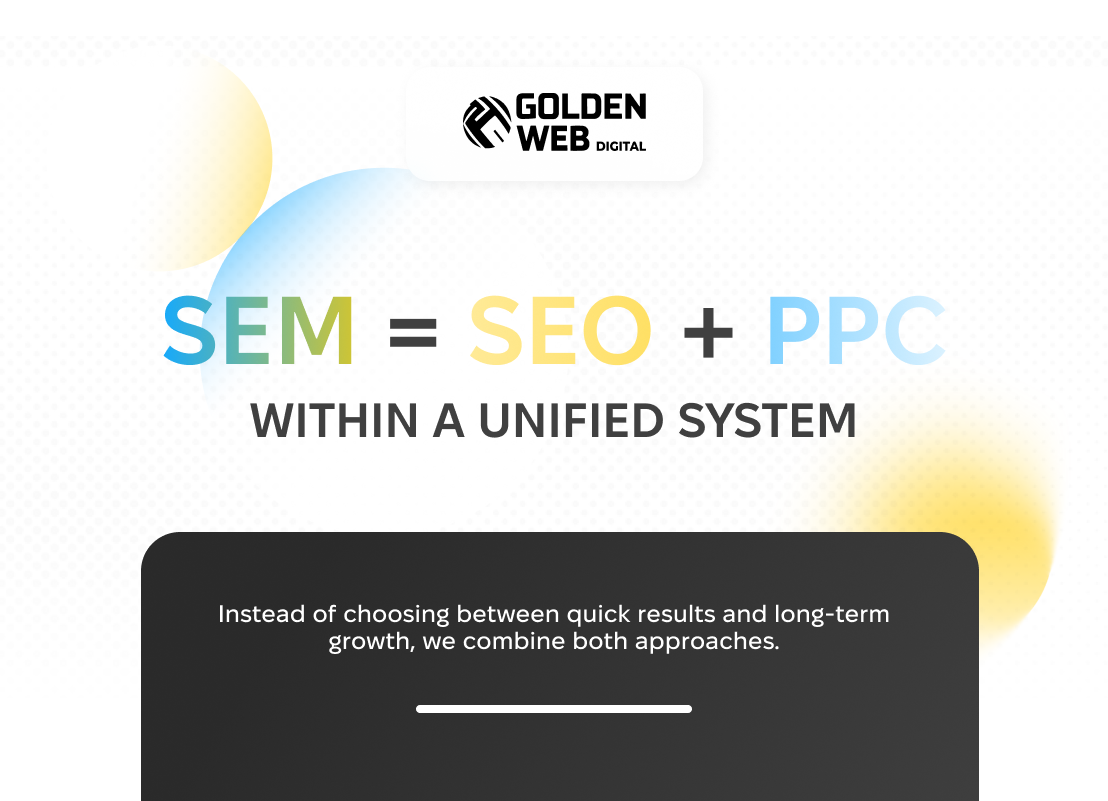
That is why we apply the SEM (Search Engine Marketing) principle: integrated website promotion across organic and paid search results.

Google Ads helps attract relevant traffic faster, validate demand, test offers, and collect data for further development.

SEO gradually increases a website's organic visibility, expands its keyword coverage, and builds a long-term source of search traffic.
PPC and SEO complement rather than compete with each other: paid ads deliver quick results and insights, while SEO strengthens the business's search presence and reduces reliance on paid traffic.
Results from one channel can reinforce the other: campaigns reveal which queries and landing pages drive meaningful actions, while SEO data uncovers broader demand and opportunities to expand the site's structure.
At GWD, SEM is not a separate service. It is our approach to search demand, where SEO and Google Ads share insights and follow a unified project growth strategy.


Suppose Google Ads is already bringing in customers. What comes next?
You could keep optimizing the same channel indefinitely. Or you could look at the bigger picture and ask: where is the next growth opportunity?
Perhaps the business receives very little organic traffic.
Perhaps the product sells well to people with existing demand, but the brand is still relatively unknown.
Or perhaps traffic is already sufficient, but the main limitation lies in the website, UX, or offer itself.
We do not see marketing as ongoing work within a single channel. Our goal is not merely to maintain existing traffic or complete a fixed list of tasks, but to continually find new growth opportunities for each project.
SEO, Google Ads, social media, and targeted advertising reach different audience segments and stages of the customer journey. The greatest value comes not from an individual tool but from a system in which marketing channels complement and strengthen each other.
Our principle is to develop the product, not simply maintain campaigns already in progress. When we identify a new growth opportunity, we bring in the right expertise, review priorities, and evolve the strategy. We do not lock a project into its initial tools: the strategy should change as the business faces new challenges and opportunities.
We also look beyond marketing metrics such as rankings, traffic, clicks, and reach. We care about the business impact: more qualified inquiries and sales, a growing customer base, new opportunities to scale, and ultimately higher company revenue.
That is why our client managers work with specialist teams to build a project development plan, define priorities, and decide when to introduce new channels. As the business grows, the plan is reviewed and expanded with additional tools and services.
We want the businesses we work with to keep moving forward. Our result is project growth, not merely a completed scope of marketing tasks.
At GWD, a marketing strategy begins not with choosing a service or advertising channel, but with understanding the business and its next growth opportunity.
A client manager and specialist teams create a project development plan: what the business needs now, which tools have the most potential, and in what sequence they should be introduced.
Understanding the business and product
Before shaping marketing solutions, we need to understand the business itself:
what it sells, to whom, what makes it competitive, how sales work, and where the company wants to go next.
We study the product, target audience, business model, geographic markets, competitive advantages, and current objectives.
This is the foundation of our strategy: marketing should serve specific business goals, not generate traffic for its own sake.
Assessing the entire marketing system
We review the project as a whole: the website, organic visibility, Google Ads, social media, positioning, content, design, analytics, and the digital product's technical condition.
We need to understand not only what is already running, but also how effectively the components work together and what is limiting further growth.
The outcome is not merely a list of shortcomings, but a clear understanding of the areas that should be addressed first.
Identifying growth opportunities
We analyze demand, audience behavior, the competitive landscape, and the potential of different acquisition channels.
We identify where the business can already achieve more and where the website, product, communication, or infrastructure must be improved first.
We do not copy competitors' marketing or introduce tools simply because “everyone does it.” Every channel must address a specific need of the project.
Setting priorities and creating a growth plan
Based on our analysis, we decide what to do now, what to introduce next, and which areas could become future growth drivers.
For one business, the first step may be Google Ads; for another, SEO; for a third, branding, social media, or improvements to the website itself.
The client manager brings together specialist recommendations in a coherent project development plan, ensuring that teams work toward the same goals rather than solving their tasks in isolation.
Launching and coordinating channels
Once priorities are set, the relevant GWD teams get involved.
SEO, Google Ads, SMM, design, and development do not operate separately within a project. Teams share information, pass on recommendations, and use collected data to improve the performance of other channels.
This turns marketing into one system where results from one channel can create new opportunities for another.
Analyzing results and identifying the next growth opportunity
The strategy does not stop evolving after launch.
We analyze traffic, inquiries, sales, user behavior, and other available business data to determine what to scale, what to change, and which next step could unlock further growth.
When needed, we reallocate resources, introduce new channels, adjust priorities, or define tasks for design and development teams.
For us, a marketing strategy is not a one-time document created at the beginning of a partnership. It is a continuous process of project development, where every next step builds on previous results and moves the business closer to its next growth milestone.
Every business comes to us with different circumstances and objectives: some want to increase sales, strengthen their Google presence, grow their brand, or enter a new market.
We therefore do not offer everyone the same marketing tools. We first identify what the business needs at this stage, then develop a strategy and select appropriate channels.
Every business has its own model, audience, resources, competitive landscape, and starting point. The same challenge may require different solutions; there is no universal set of marketing channels.
To find out where your project should begin, consult our client managers. They will help assess the current situation, identify key limitations and growth opportunities, and involve specialist teams when necessary.
Together, we will define priority business objectives, promising traffic sources, and a marketing action plan tailored to your goals and resources.
Effective promotion does not always start with launching another advertising campaign.
Sometimes the main limitation lies within the digital product itself.

The website may lack proper SEO structure. The landing page may not match advertising traffic. Analytics may fail to transmit essential data. The CMS may prevent important functionality. UX may introduce unnecessary barriers to purchase.
At Golden Web Digital, marketing and technical teams work together.


SEO + Development
SEO specialists define requirements for website architecture, technical foundations, page structure, and content before development begins.



Google Ads + Development + Design
The paid advertising team can define requirements for landing pages, advertising scenarios, conversion tracking, and necessary functionality.

Marketing + Design
Designers work on UX, content presentation, advertising materials, and visual communication.
Marketing and data
We use data from SEO, advertising platforms, and user behavior to further optimize both promotion and the product itself.
As a result, marketing does not have to keep adapting to technical limitations: when necessary, we can change and develop the digital product itself.
Development solutions“It seems this ad is performing better.”
“It looks like customers are coming from social media.”
In marketing, “it seems” is not the best basis for scaling.
Comprehensive business promotion cannot rely on intuition alone.
That is why analytics is part of every marketing discipline.
Depending on the project, we use GA4, Google Search Console, Google Ads, Meta advertising platforms, CRM, and other available sources to understand not just clicks and impressions, but user behavior and the path to conversion.
The data helps answer practical questions:
Marketing analytics is not about reporting for its own sake — it supports better decisions about future project growth.
Different marketing disciplines can become the growth driver in different projects.
For one business, it may be SEO and increased organic visibility. For another, effective Google Ads campaigns. For a third, a change in positioning, content strategy, or the digital product itself.
That is why our case studies show more than final metrics: we explain the starting point, business goals, promotion channels used, reasoning behind our decisions, and results.
Case study: merging two websites into one custom Python platform while preserving results
View case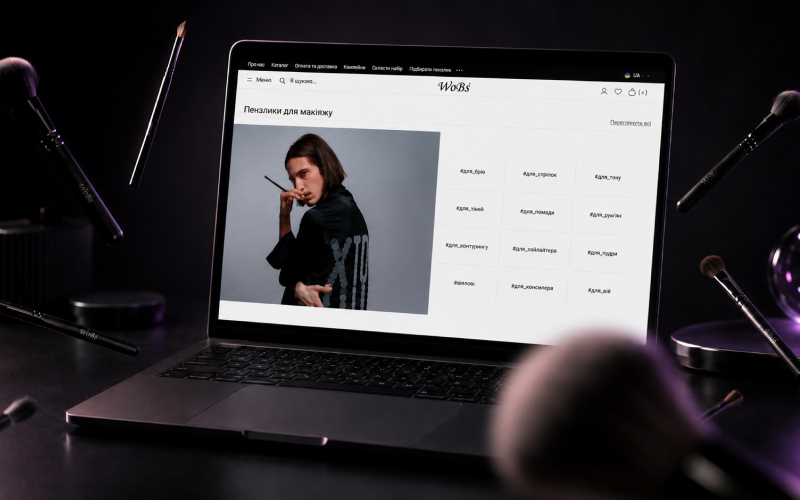
How a high-quality website, SEO, and branding improved Google Ads performance: the WoBs case study
View case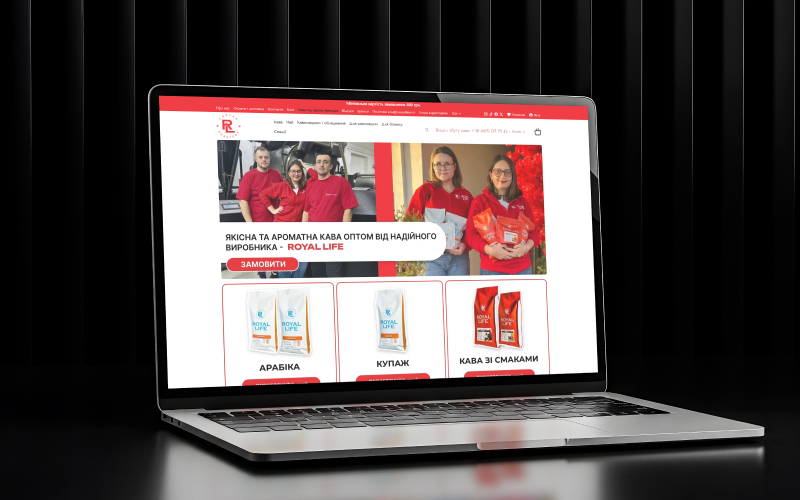
Optimization and launch of Google Ads for Royal Life's coffee and coffee equipment online store
View caseThat is what our team is here for.
You do not need to decide on your own whether SEO, Google Ads, SMM, or another digital marketing tool is right for you.
Tell us about your business, product, current situation, and goals.
A client manager will carry out an initial assessment and involve the relevant specialists if needed. Together, we will identify priority growth opportunities, promising traffic sources, and the best order of work.
The strategy is not limited to one channel. The greatest growth potential appears when SEO, Google Ads, targeted advertising, Brand Management, SMM, Design, and DEV work as one system.
Data and results from one discipline inform decisions in another: campaigns help validate demand and offers faster; SEO reveals new organic growth opportunities; SMM and Brand Management build awareness and audience relationships; and Design and DEV improve the product, landing pages, and user experience.
Our goal, therefore, is not merely to choose a starting channel but to gradually build a marketing system in which different disciplines reinforce each other and work toward shared business goals.
The mix of services depends on the needs of each business. It can include SEO, Google Ads, Brand Management, social media promotion, Meta Ads, design, and work on the digital product itself.
Analytics is an integral part of each discipline.
The comprehensive approach is not about the number of services used, but about ensuring that acquisition channels follow a shared strategy and take each other's results into account.
No. We first assess the business, the project's current state, and the potential of different traffic sources, then set priorities.
It is often more effective to introduce marketing tools gradually than to split resources across many disciplines at once.
SEO and paid advertising solve different problems.
Google Ads can reach existing demand and provide insights faster, while organic promotion builds momentum over time and gradually increases search visibility.
For many projects, it makes more sense to use these tools together as part of a unified search marketing strategy than to choose one over the other.
SEM is an approach to search marketing in which SEO and paid Google advertising are treated as interconnected channels.
At GWD, this is not a separate service. We apply this principle by combining organic promotion, Google Ads, analytics, and website improvements whenever it suits the business's objectives.
Yes. Before promotion begins, we assess the website's technical condition, structure, UX, analytics setup, and readiness for SEO and advertising campaigns.
If technical or UX limitations may hinder results, we recommend the necessary changes.
It depends on the channel, competition, project condition, budget, and goals.
Paid promotion provides initial data more quickly, whereas SEO and brand development typically have a more cumulative effect.
Yes. You can choose an individual service, such as SEO, Google Ads, or targeted advertising.
We still evaluate it in the context of the overall marketing system to ensure that decisions in one channel align with the needs of others.